One free game that takes kids ages 4–7 from their first letter sounds to reading full sentences — built by a dad for his own 7-year-old. No ads, no accounts, nothing to install. 🦎
▶ Play free nowWorks in any browser on any phone, tablet, or computer
Read with Glass isn't a pile of disconnected mini-games — it's one path. Pure letter sounds come first ("mmm", not "em"), in the classic s-a-t-p order so real words appear fast. Blending starts the moment your child knows three letters. Sight words ride in alongside, and it all pays off in fully decodable mini-stories your child reads aloud to make the pictures move. Each level unlocks the next, so you never have to figure out what comes after what.
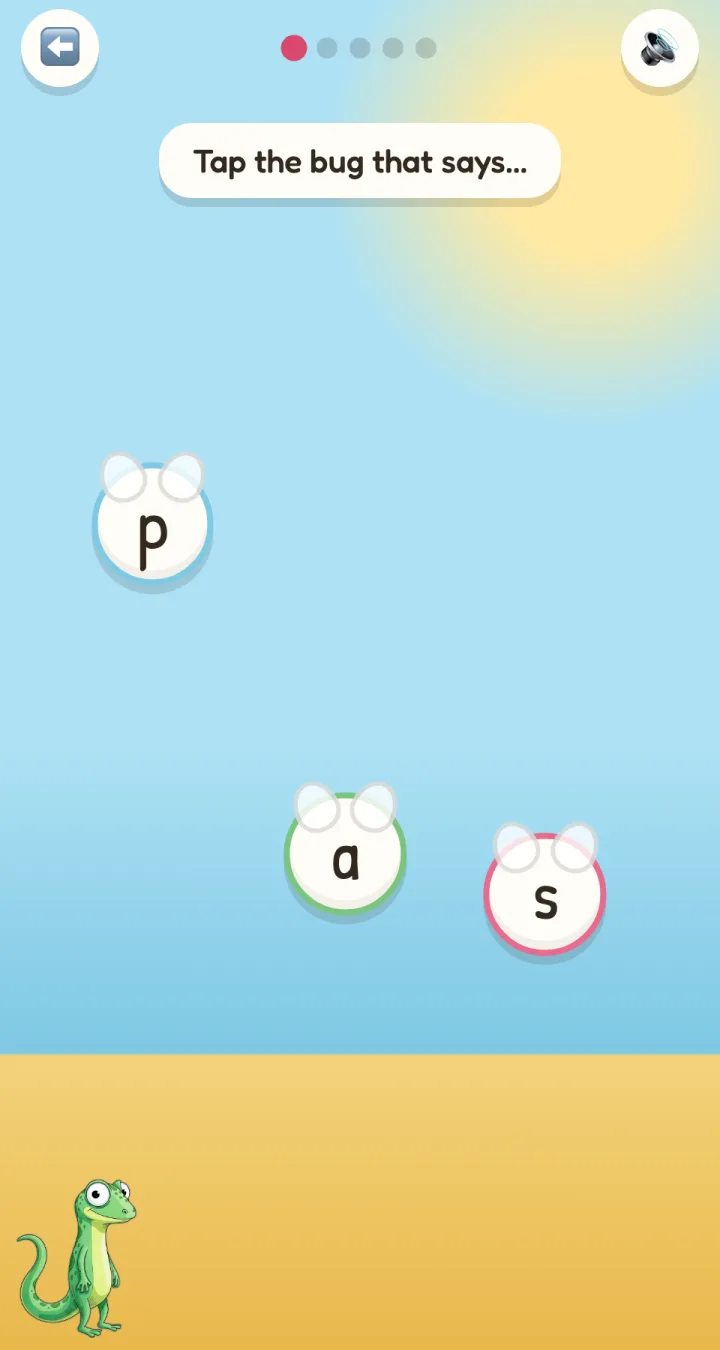
Hear a pure sound, zap the letter bug that says it. The very first step.
Start here →
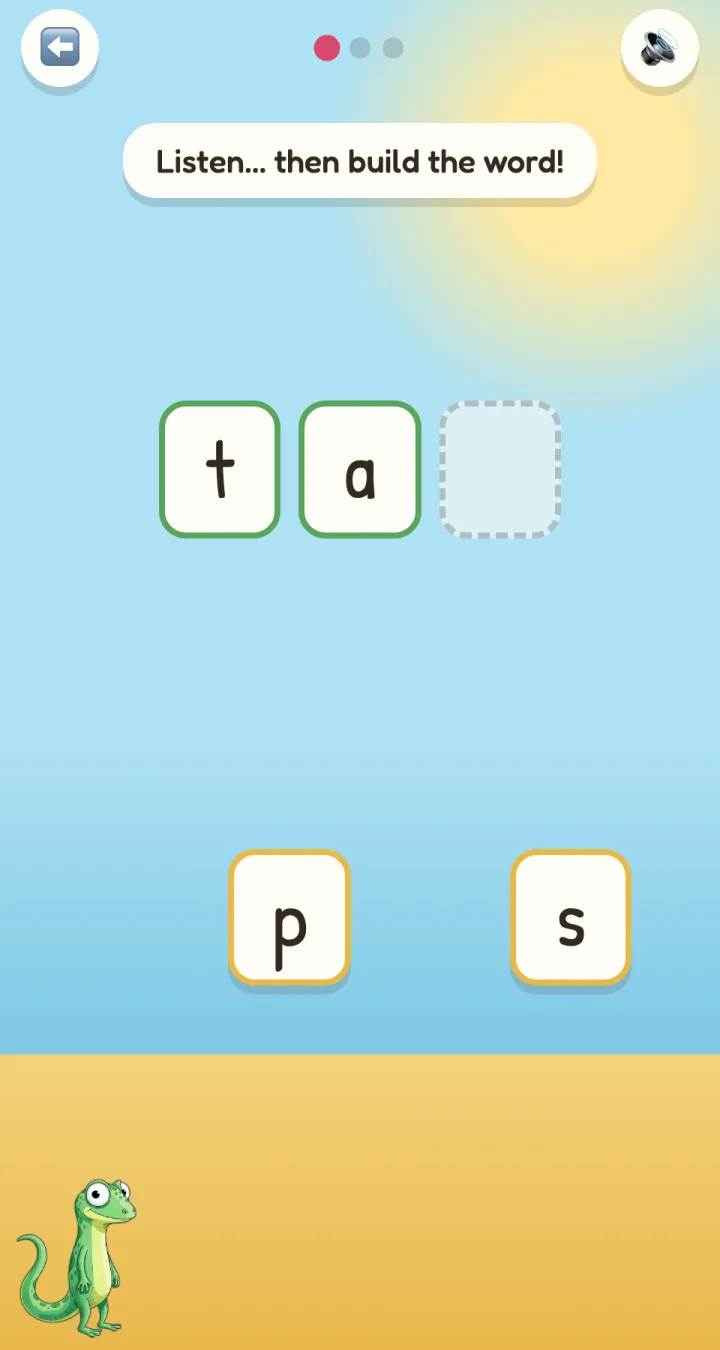
Push sounds together — s…a…t makes sat! Where reading actually begins.
Explore →
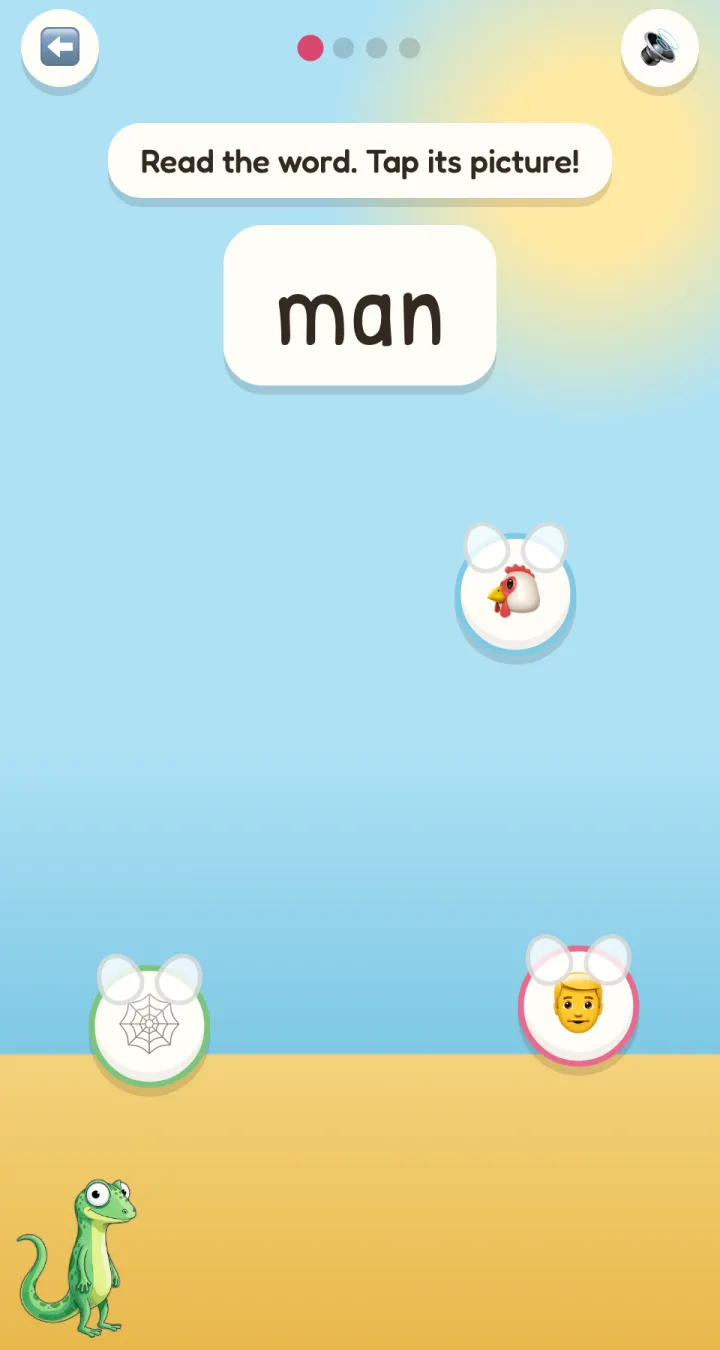
Build and read short words like sat, pin, and man — the first real words.
Explore →
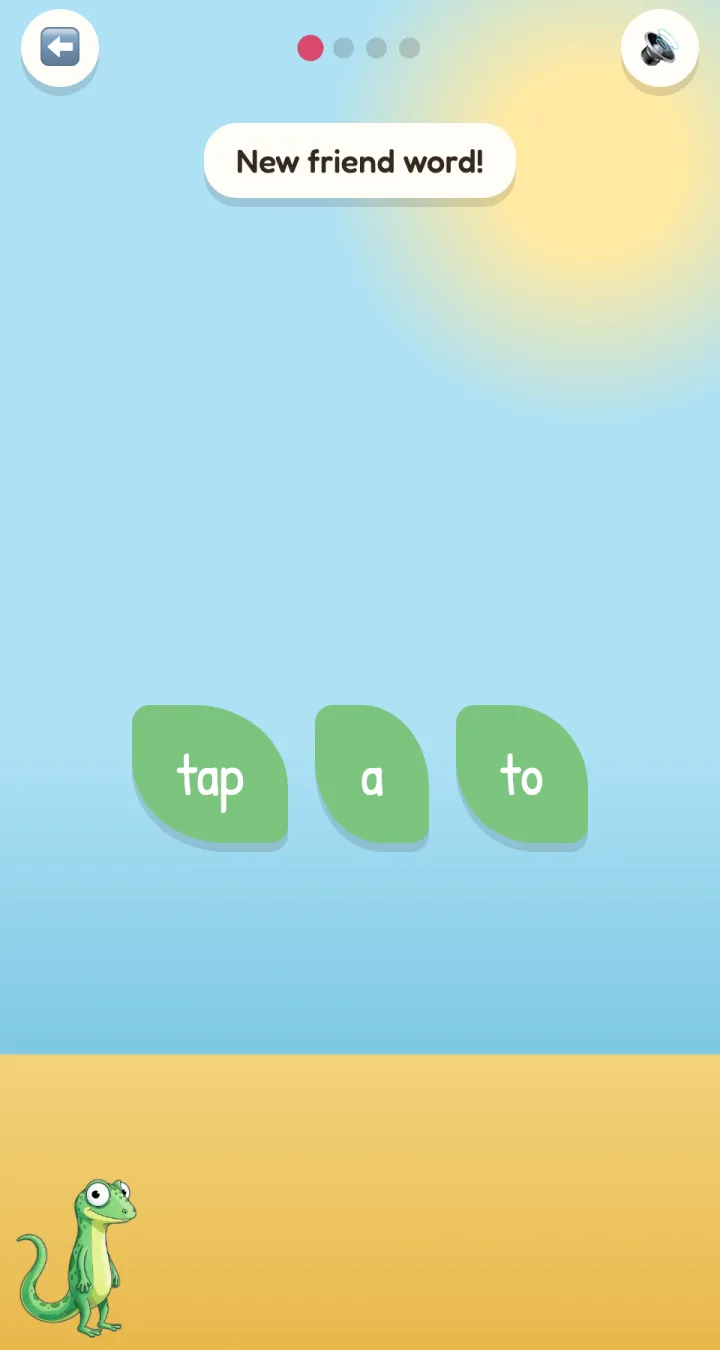
The little glue words — the, a, to — caught on leaves, then met in stories.
Explore →It's all one free game: press play and the map walks your child up the staircase. También en español — juegos para aprender a leer.
The game follows the science of reading: systematic synthetic phonics, decodable text only, no guessing from pictures. Every story uses just the letters and words already taught. There are no ads, no accounts, no in-app purchases, and no fail states — miss twice and the game quietly shows a hint. Progress saves on your device only, and it works offline once loaded.
5–10 minutes at a time is plenty. Sit together and echo the sounds!
10 big pages of Glass & pals for after screen time.
Sounds first, then blending, then words, then sentences. Most systematic programs start with a small set of letter sounds (classically s, a, t, p), teach blending those sounds into words almost immediately, add high-frequency words alongside, and get the child reading decodable sentences as early as possible. Read with Glass follows that exact staircase — each level unlocks the next, so the order takes care of itself.
A good phonics game does the drilling — sounds, blending, word recognition — better than flashcards, because kids volunteer for it. But children also need lap time with real books, being read to, and someone to talk with about words. Think of the game as the 10 minutes of practice that makes the bedtime book go better, not as a replacement for it.
For this kind of game, 5–10 minutes at a sitting is plenty — that's roughly one or two levels, and it's how Read with Glass is paced. Short, frequent sessions beat long ones, and sitting together (echoing the sounds out loud) turns the screen time into conversation time. The game has no ads and no engagement tricks, so it doesn't fight you when it's time to stop.